How Long Do Fillings Last? Lifespan by Material
Typical filling lifespans by material, what shortens them and the signs a filling needs attention.
Checked by our editorial team. Clinical review by a dentist: planned, not yet done for this article.

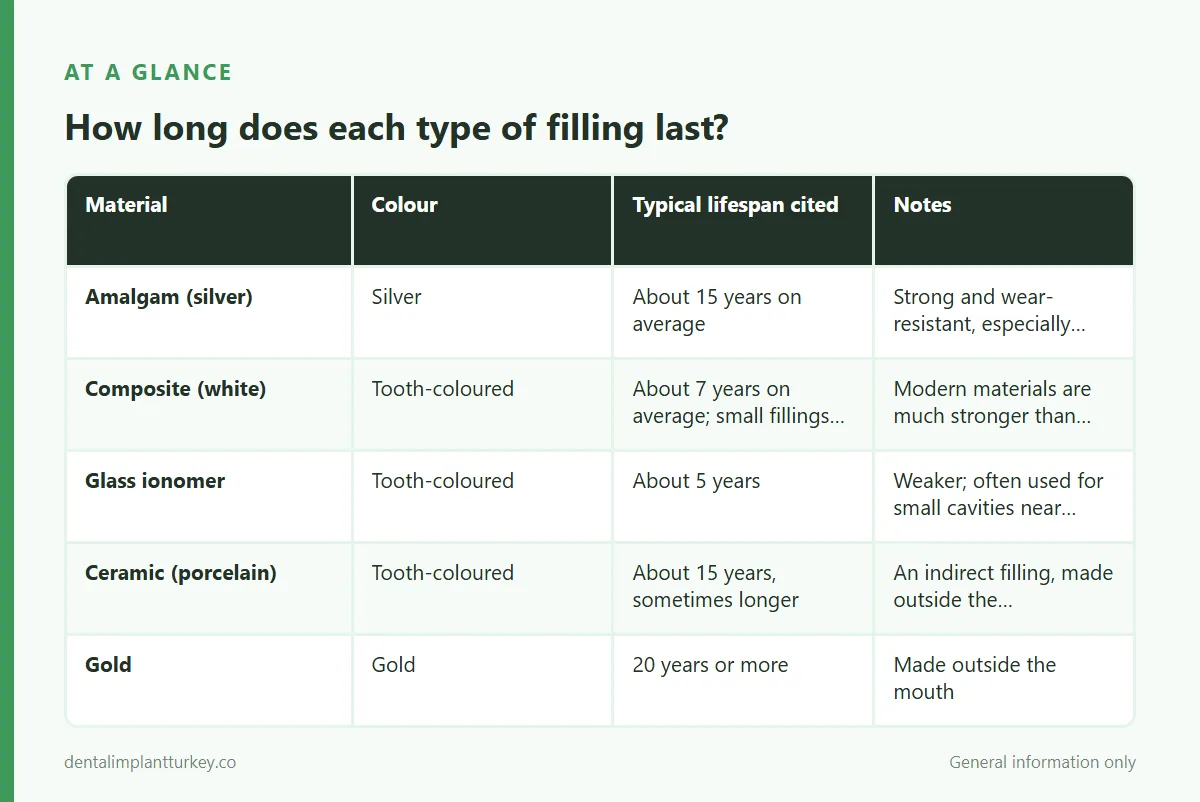
How long do fillings last? It depends mainly on the material. Published averages range from around 5 years for glass ionomer and about 7 years for composite to around 15 years for amalgam and 20 years or more for gold.
Those figures are averages, not promises. The same filling material can last very differently in two mouths depending on where the filling is, how big it is, how hard you bite and how well the tooth around it is looked after. Below you will find typical lifespans by material, the habits that shorten them and the signs that a filling may need attention.
How long does each type of filling last?
| Material | Colour | Typical lifespan cited | Notes |
|---|---|---|---|
| Amalgam (silver) | Silver | About 15 years on average | Strong and wear-resistant, especially on back teeth |
| Composite (white) | Tooth-coloured | About 7 years on average; small fillings in healthy mouths can last 10 years or more | Modern materials are much stronger than older ones |
| Glass ionomer | Tooth-coloured | About 5 years | Weaker; often used for small cavities near the gum line |
| Ceramic (porcelain) | Tooth-coloured | About 15 years, sometimes longer | An indirect filling, made outside the mouth (Cleveland Clinic) |
| Gold | Gold | 20 years or more | Made outside the mouth |
The lifespan figures above are averages reported by Healthline from published studies. Colgate notes that gold and amalgam can last up to 20 years in the right circumstances, and Cleveland Clinic says some fillings can last up to 20 years depending on the material used. All three agree that no filling is permanent.
Are white fillings less durable than silver ones?
Less than they used to be. The Oral Health Foundation says older white fillings did not last as long as amalgam, but modern materials are much stronger and in many cases last just as well. It also notes that research shows amalgam usually lasts longer and resists wear better, particularly on back teeth where chewing forces are highest. In practice, your dentist weighs the position of the tooth, the size of the cavity and your preferences when recommending a material.
What makes a filling wear out sooner?
Healthline and Colgate list several factors that shorten a filling’s life:
- New decay around the edges. Sugary foods and drinks feed the bacteria that cause it.
- Grinding or clenching, especially at night.
- Hard or sticky foods that wear the surface or pull on the filling.
- Constant chewing stress on large fillings in back teeth.
- Staining drinks such as tea and coffee, which mainly affect the look of composite.
- Injury to the tooth.
- Brushing and flossing habits.
The Oral Health Foundation adds that lifespan depends a great deal on where the filling sits in your mouth and how heavily your teeth meet when you bite.
What are the signs a filling needs replacing?
- A chip, crack or rough edge you can feel with your tongue
- A filling that falls out, partly or completely
- A gap between the filling and the tooth, which can let bacteria get underneath
- New sensitivity or soreness in that tooth
- In more advanced cases, sharp pain when chewing or strong sensitivity to heat or cold
Some problems give no warning at all. Colgate explains that dentists check fillings for weaknesses and take X-rays to look for decay underneath, which is one reason routine check-ups matter even when nothing hurts.
Should you replace old fillings that still work?
Usually not. The Oral Health Foundation says there is no clinical reason to remove a working amalgam filling, and recommends replacing fillings only when they are worn, broken or have decay underneath. It points out that removing a sound filling can mean extra drilling and loss of healthy tooth. If you want a silver filling changed to white for appearance, it suggests waiting until the old one genuinely needs replacing.
How can you make your fillings last longer?
- Brush twice a day with fluoride toothpaste and clean between your teeth daily
- Cut down on sugary snacks and drinks between meals
- Ask your dentist about a mouthguard if you grind or clench
- Go easy on very hard or sticky foods that wear or pull on fillings
- Get chips or cracks seen promptly rather than waiting for pain
If a filling does need replacing on the NHS, it is a Band 2 treatment; our guide to NHS dental charges explains the bands. For broader prevention, see how to protect your teeth from tooth decay.
Sources
- Healthline, How Long Do Fillings Last?
- Colgate, Dental Fillings Are Durable But Don’t Last Forever
- Oral Health Foundation, White fillings
- Oral Health Foundation, Dental amalgam fillings
- Cleveland Clinic, Dental Fillings
- NHS, What is included in each NHS dental band charge?
This article is general information and is not a substitute for advice from your own dentist.