Dental Implant Procedure UK – Step-by-Step
Checked by our editorial team. Clinical review by a dentist: planned, not yet done for this article.

Dental Implant Procedure UK – Step-by-Step
Embarking on the journey to restore your smile with dental implants in the UK can be a life-changing decision. Dental implants offer a durable, natural-looking, and highly functional solution for missing teeth, providing significant advantages over traditional bridges or dentures. They are titanium posts surgically placed into the jawbone beneath the gum line, acting as artificial tooth roots. These posts provide a strong foundation for fixed or removable replacement teeth that are custom-made to match your natural teeth. Understanding the meticulous process involved is crucial for anyone considering this advanced dental treatment. This comprehensive guide will walk you through each stage of the dental implant procedure, from initial consultation to final restoration, ensuring you are well-informed about what to expect.
If implants are part of your plan, read our guide to dental implants in Turkey for UK patients before comparing quotes.
Understanding Dental Implants: More Than Just a Tooth Replacement
Dental implants represent a pinnacle of modern restorative dentistry, offering a permanent solution for tooth loss. Unlike dentures that rest on the gums or bridges that rely on adjacent teeth for support, implants integrate directly with your jawbone. This unique biological process, known as osseointegration, creates an incredibly stable and long-lasting foundation, mimicking the natural structure of your teeth. The implant itself is a small, screw-shaped post, typically made of biocompatible titanium, a material known for its ability to fuse with bone without causing adverse reactions. Once integrated, an abutment, a small connector post, is attached to the implant, over which a custom-made crown, bridge, or denture is placed. The benefits extend beyond mere aesthetics; implants preserve jawbone integrity, prevent bone loss, and restore full chewing function, allowing you to eat, speak, and smile with confidence. This robust solution contributes significantly to overall oral health and quality of life.
The Dental Implant Procedure UK – Step-by-Step
The process for a successful Dental Implant Procedure UK is carefully phased, ensuring optimal healing and long-term success. It typically involves several appointments spread over several months, allowing for proper integration and customisation.
1. Initial Consultation and Comprehensive Assessment
The journey begins with a thorough examination by a qualified dental professional. This critical first step involves a detailed assessment of your oral health, including your gums, remaining teeth, and jawbone structure. Advanced diagnostic tools such as X-rays, OPG (Orthopantomogram) scans, and sometimes 3D Cone Beam Computed Tomography (CBCT) scans are utilised to evaluate bone density and volume, identify nerve locations, and plan the precise placement of the implant. Your medical history, including any chronic conditions or medications, will also be reviewed to ensure you are a suitable candidate for surgery. This consultation is also an opportunity to discuss your expectations and address any concerns you may have.
2. Personalised Treatment Planning
Based on the diagnostic findings, a bespoke treatment plan is meticulously crafted. This plan outlines the number of implants required, their exact positions, the type of restoration (crown, bridge, or denture), and the overall timeline. If necessary, preparatory procedures such as bone grafting (to augment insufficient bone volume) or sinus lifts (to increase bone in the upper jaw) may be included in the plan. Digital imaging and mock-ups may be used to show you the expected outcome, allowing for your input and ensuring your vision for your new smile aligns with the clinical possibilities.
3. Implant Placement Surgery
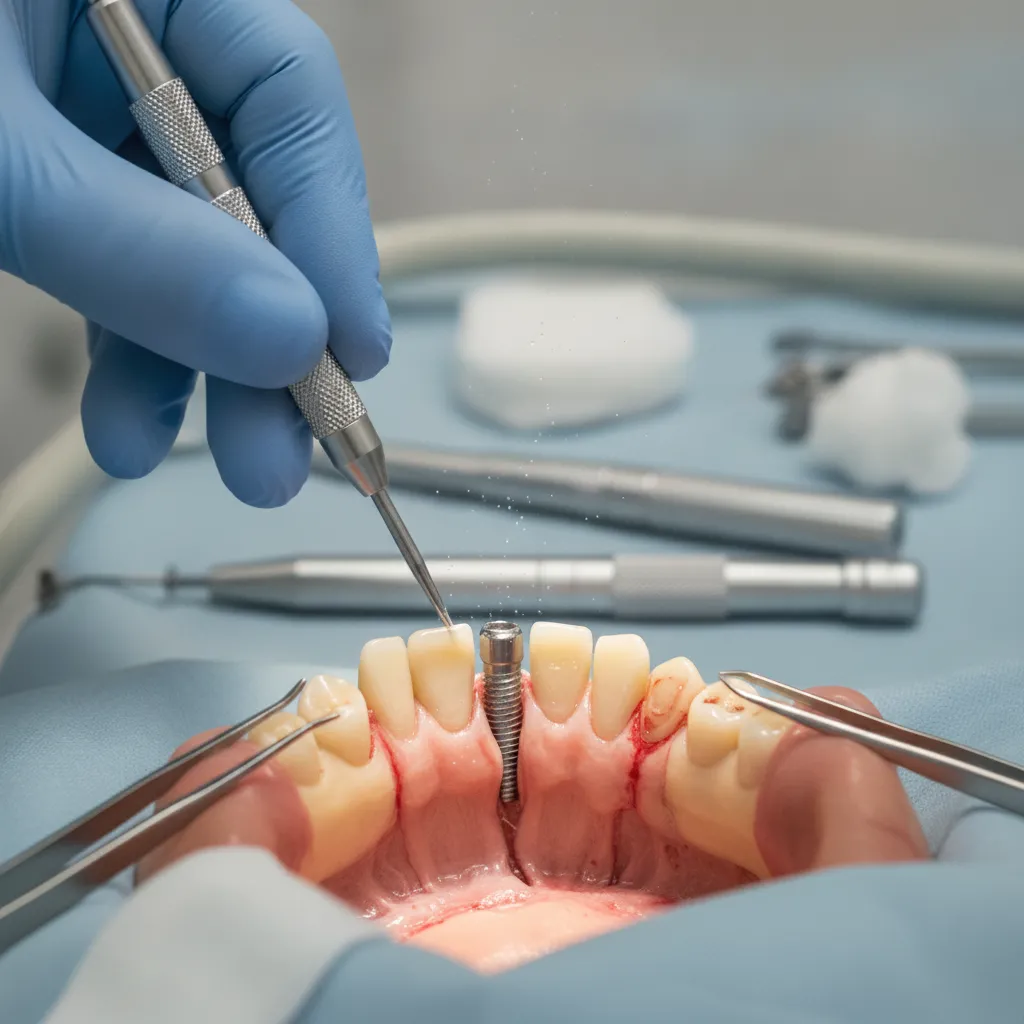
This is the surgical phase where the titanium implant post is inserted into your jawbone. The procedure is typically performed under local anaesthesia, ensuring you feel no pain, though sedation options are available for anxious patients. A small incision is made in the gum tissue to expose the underlying bone. A precise pilot hole is then drilled into the bone, into which the dental implant is gently screwed. Once the implant is securely in place, the gum tissue is typically sutured closed over the implant to protect it during the healing period. The entire surgical process is often quicker and less uncomfortable than patients anticipate.
4. Osseointegration (Healing Period)
Following implant placement, a crucial healing period of typically 3 to 6 months begins. During this time, the titanium implant naturally fuses with the surrounding jawbone in a process called osseointegration. This biological bonding provides the strong, stable foundation necessary for your new tooth. While the implant is healing, you may be fitted with a temporary crown, bridge, or denture to maintain aesthetics and function. Regular check-ups during this phase ensure proper healing and monitor the progress of osseointegration.
5. Abutment Placement
Once osseointegration is complete, a minor surgical procedure is performed to attach the abutment. This involves reopening the gum tissue to expose the top of the implant. The abutment, a small connector post, is then screwed onto the implant. This post will protrude through the gum line, serving as the anchor for your final restoration. In some cases, the implant and abutment can be placed in a single stage, depending on the specific implant system and the patient’s individual circumstances.
6. Final Restoration – Crown, Bridge, or Denture Attachment
After the gums have healed around the abutment (usually 1-2 weeks), impressions of your mouth are taken. These impressions are sent to a dental laboratory where your custom-made crown, bridge, or denture is meticulously fabricated to match the colour, shape, and size of your existing teeth, ensuring a smooth and natural appearance. Once fabricated, the final restoration is securely attached to the abutment, completing the dental implant procedure.
| Stage | Description | Approximate Duration |
|---|---|---|
| Initial Consultation & Assessment | Comprehensive oral exam, X-rays/scans, health review. | 1-2 appointments |
| Treatment Planning | Customised plan development, addressing any pre-procedures. | 1-2 appointments |
| Implant Placement Surgery | Surgical insertion of titanium implant into jawbone. | 1-2 hours per implant |
| Osseointegration (Healing) | Implant fuses with jawbone. Temporary restoration may be used. | 3-6 months |
| Abutment Placement | Minor procedure to attach connector post to implant. | 1 appointment |
| Final Restoration | Impressions taken, custom crown/bridge/denture fabricated and fitted. | 2-3 appointments (over 2-4 weeks) |
Recovery and Aftercare Following Dental Implant Surgery
After the implant placement surgery, it’s normal to experience some mild discomfort, swelling, and bruising. Pain medication, cold compresses, and a soft diet for a few days are usually recommended to manage these symptoms effectively. Strict adherence to post-operative instructions provided by your dentist is crucial for proper healing and to prevent complications. This includes maintaining excellent oral hygiene, avoiding strenuous activities, and refraining from smoking, which can significantly impair healing. Long-term care involves regular dental check-ups, meticulous brushing and flossing around the implant, and using interdental brushes or water flossers to clean hard-to-reach areas. With proper care, dental implants can last for many decades, often a lifetime.
Factors Influencing Dental Implant Success Rates
The success rate of dental implants is remarkably high, often exceeding 95%. However, several factors can influence this outcome. A patient’s overall health plays a significant role; conditions such as uncontrolled diabetes, certain autoimmune diseases, and heavy smoking can compromise healing and osseointegration. The quality and quantity of the patient’s jawbone are also paramount, as sufficient bone is needed to securely anchor the implant. The skill and experience of the dental surgeon, along with the quality of the implant materials used, are critical for successful placement and long-term stability. Finally, diligent oral hygiene and regular follow-up appointments post-procedure are essential to prevent peri-implantitis, an inflammatory condition that can affect implant longevity.
Are Dental Implants the Right Choice for You?
Dental implants are an excellent option for most individuals who have lost one or more teeth due to decay, injury, or gum disease. Ideal candidates generally have good overall health, sufficient bone density in their jaw, and healthy gums. While age is not typically a barrier, comprehensive assessment is key. Implants offer superior stability, comfort, and longevity compared to removable dentures or traditional bridges, which often require altering adjacent healthy teeth. They also help preserve facial structure and prevent further bone loss in the jaw. During your consultation, your dental professional will assess your individual circumstances and discuss whether dental implants are the most suitable solution for your specific needs, or if alternative treatments would be more appropriate.

Consideration of dental implant costs is a vital part of planning your treatment, and it’s essential to discuss all financial aspects with your clinic upfront. For more in-depth scientific information on dental implants, you can refer to authoritative sources such as Wikipedia’s entry on Dental Implants.
Choosing dental implants is an investment in your oral health and overall well-being. By understanding each step of the procedure, from initial assessment to final restoration, patients can approach this transformative treatment with confidence. The meticulous planning, advanced surgical techniques, and dedicated healing period collectively contribute to the high success rates and lasting benefits that dental implants provide, allowing individuals to enjoy a fully restored and beautiful smile for years to come.
For more detail on the surgery itself, read what happens during implant surgery; for scheduling, see how many visits are needed.
Frequently asked questions
How long does the implant process take?
It varies. Healing after placement usually takes a few months before the final crown is fitted, and longer if bone grafting is needed. Your dentist should give you a timeline in writing.
Does implant surgery hurt?
The area is numbed with local anaesthetic, and sedation may be offered. Soreness and swelling for a few days afterwards are common and are usually managed with ordinary painkillers.
Can anyone have dental implants?
Not everyone. You need enough healthy bone, healthy gums and reasonable general health. Smoking, poorly controlled diabetes and some medicines increase the risk of problems.
What are the main risks?
Infection, nerve injury, sinus problems in the upper jaw and the implant failing to fuse with the bone. Ask your dentist how these risks apply to you.