Smile Makeover: What Treatments Are Included?
Checked by our editorial team. Clinical review by a dentist: planned, not yet done for this article.

Smile Makeover: What Treatments Are Included?
A smile makeover is not a single, one-size-fits-all procedure. Instead, it is a comprehensive and highly personalised combination of cosmetic and restorative dental treatments designed to achieve your ideal smile. This process addresses multiple aesthetic concerns simultaneously, from tooth colour and alignment to the shape and size of your teeth. The ultimate goal is to create a beautiful, harmonious, and natural-looking smile that enhances your facial features and boosts your confidence. The journey begins with a detailed consultation where your aesthetic goals are discussed, and a custom treatment plan is meticulously crafted to transform your smile into one you are proud to share.

The entire process is rooted in the principles of smile design, which consider factors like facial symmetry, tooth proportions, and gum line aesthetics. Before any cosmetic work begins, a thorough examination is conducted to ensure a foundation of good oral health. Any underlying issues, such as cavities or gum disease, must be addressed first to ensure the longevity and success of the cosmetic enhancements. This foundational approach helps make sure that your new smile is not only beautiful but also healthy and functional for years to come.
The Consultation: Your First Step to a New Smile
The initial consultation is the most critical phase of the smile makeover journey. This is where you and your cosmetic dentist collaborate to design your future smile. During this appointment, you will have an in-depth discussion about what you wish to change. This includes aspects like tooth colour, length, shape, and overall alignment. It is helpful to bring pictures of smiles you admire to give your dentist a clear visual reference of your goals.
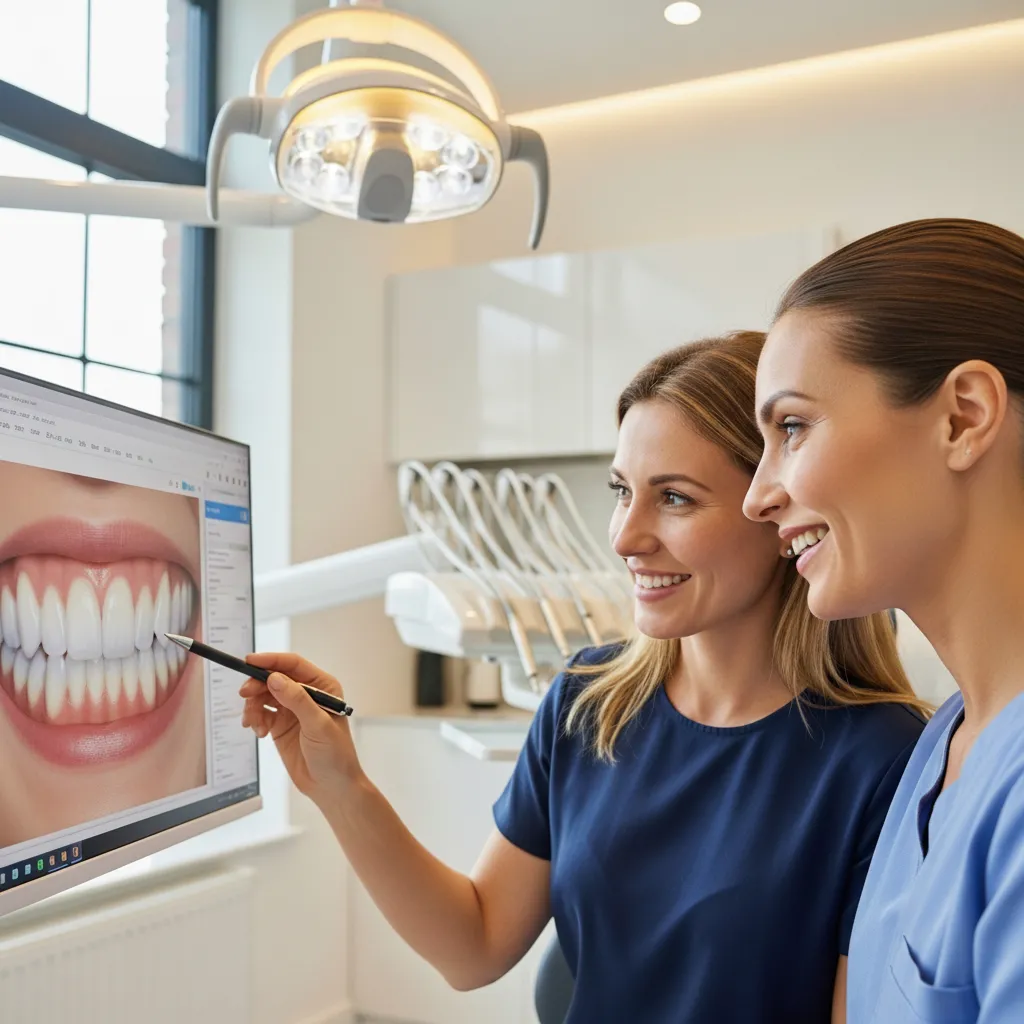
A comprehensive oral examination follows, which may include digital X-rays and 3D imaging. These diagnostic tools allow the dentist to assess the health of your teeth, roots, and jawbone. They will check for any pre-existing conditions that need attention before cosmetic procedures can be performed. The dentist will also evaluate your facial structure, lip line, and the natural symmetry of your features to ensure the proposed changes will be in harmony with your overall appearance. Advanced technology often allows for digital smile design, where you can see a virtual preview of your results before committing to the treatment plan. This visualisation is a powerful tool that helps manage expectations and ensures you and your dentist are aligned on the final outcome.
Core Components of a Comprehensive Smile Makeover
A smile makeover draws from a palette of advanced cosmetic dentistry procedures. The specific treatments included in your plan will depend entirely on your unique needs and aesthetic objectives. Below are the most common and transformative treatments used to build a perfect smile.
Dental Veneers: The Foundation of Transformation
Dental veneers are ultra-thin, custom-made shells of tooth-coloured material designed to cover the front surface of teeth. They are the cornerstone of many smile makeovers because of their versatility and dramatic results. Veneers can correct a wide range of imperfections, including severe discolouration that doesn’t respond to whitening, chipped or broken teeth, minor gaps, and slight misalignment. Materials like E-max porcelain and Zirconium are popular for their exceptional strength and ability to mimic the light-reflecting properties of natural tooth enamel. The procedure typically involves minimal preparation of the tooth surface, after which the veneers are permanently bonded, instantly creating a straight, white, and perfectly shaped smile.
Teeth Whitening: Restoring Natural Brilliance
For many individuals, the first step towards a better smile is addressing discolouration. Professional teeth whitening is a safe and effective way to dramatically brighten your smile by several shades. Unlike over-the-counter kits, in-office or professionally supervised whitening treatments use higher concentrations of bleaching agents for more significant and longer-lasting results. Whitening is often performed as a preliminary treatment before veneers or crowns are placed. This allows the new restorations to be matched to a brighter, newly established baseline tooth colour, ensuring a uniformly brilliant smile. To learn more about the process, you can explore The Complete Guide to Teeth Whitening for an in-depth look at professional treatments.
Dental Implants: The Permanent Solution for Missing Teeth
A complete smile is a healthy smile. Missing teeth not only affect your appearance but can also lead to other oral health issues, such as jawbone deterioration and shifting of adjacent teeth. Dental implants are the gold standard for replacing missing teeth. An implant consists of a biocompatible titanium post that is surgically placed into the jawbone, acting as an artificial tooth root. After a healing period known as osseointegration, where the implant fuses with the bone, a custom-made crown is attached. The result is a replacement tooth that looks, feels, and functions exactly like a natural one. Implants provide a permanent, stable, and highly aesthetic solution that is integral to a full smile makeover.
Dental Crowns and Bridges: Restoring Form and Function
Dental crowns, also known as caps, are used to completely cover a damaged, decayed, or aesthetically unpleasing tooth. In a smile makeover, crowns made from high-quality materials like Zirconium are used to restore a tooth’s shape, size, strength, and appearance. They can correct issues of severe discolouration, irregular shape, or structural weakness. A dental bridge, on the other hand, is used to “bridge the gap” created by one or more missing teeth. It typically consists of two crowns that are placed on the teeth on either side of the gap, with a false tooth (or teeth) in between. Both crowns and bridges play a crucial role in restoring the full architecture of the smile and ensuring proper function.
The Smile Makeover Process: A Step-by-Step Overview
The sequence and timeline of a smile makeover are carefully planned to be as efficient as possible while ensuring optimal results. The process is phased, with foundational health treatments preceding cosmetic enhancements. The complexity and number of procedures involved will determine the overall duration of the makeover.
Understanding the components and their typical timelines can help set clear expectations. The following table provides a general overview of the treatments commonly involved in this transformative process.
| Treatment Component | Primary Goal | Typical Timeline | Key Considerations |
|---|---|---|---|
| Consultation & Planning | Define goals and create a treatment plan | 1-2 appointments | Patient’s aesthetic goals and oral health status are evaluated. |
| Teeth Whitening | Establish a bright, uniform baseline colour | 1 appointment | Often done before veneers or crowns for colour matching. |
| Dental Veneers | Correct shape, colour, gaps, and chips | 2-3 appointments over 1-2 weeks | Requires minimal tooth preparation and precise custom fabrication. |
| Dental Implants | Permanently replace missing teeth | 3-6 months | Requires a healing period for the implant to integrate with the jawbone. |
| Dental Crowns/Bridges | Restore damaged teeth or fill gaps | 2 appointments over 1-2 weeks | Used to improve both the function and aesthetics of the smile. |
The integration of these procedures follows a logical order. For instance, if dental implants are needed, their placement and healing are often a priority. Teeth whitening would precede the fabrication of veneers and crowns to ensure the final restorations match the newly brightened natural teeth. This systematic approach is based on established principles of smile design, which serve as a guide for dentists in creating aesthetically pleasing and functional outcomes.
Who Is an Ideal Candidate for a Smile Makeover?
An ideal candidate for a smile makeover is any individual who is unhappy with the appearance of their smile due to multiple cosmetic issues. Candidates should have good overall oral hygiene and healthy gums, as this provides a stable foundation for cosmetic treatments. If gum disease or significant decay is present, these issues must be treated before embarking on the makeover process.
This procedure is perfectly suited for individuals with concerns such as:
- Discoloured or Stained Teeth: Deep stains that are resistant to whitening can be concealed with veneers or crowns.
- Chipped, Cracked, or Worn Teeth: Veneers and crowns are excellent solutions for restoring the integrity and appearance of damaged teeth.
- Gaps and Spaces: Small gaps can be closed with veneers, while larger spaces from missing teeth require bridges or implants.
- Misaligned or Crooked Teeth: While orthodontics is the traditional solution, veneers can offer an “instant orthodontic” effect for minor alignment issues.
- Missing Teeth: Dental implants and bridges restore the completeness of the smile, which is crucial for both aesthetics and function.
- Uneven or Irregularly Shaped Teeth: Veneers can be used to reshape teeth, creating a more uniform and harmonious appearance.
Maintaining Your New Smile for Long-Lasting Results
Investing in a smile makeover is also an investment in your long-term oral health. Protecting your new smile is essential to ensure the longevity of the restorations and the continued health of your natural teeth. With proper care, the results of your smile makeover can last for many years, even decades.
Oral Hygiene Best Practices
Meticulous oral hygiene is non-negotiable. This includes brushing at least twice a day with a non-abrasive fluoride toothpaste and a soft-bristled toothbrush. Flossing daily is critical to clean between the teeth and around the margins of your restorations, preventing plaque buildup and decay. An antiseptic mouthwash can also help reduce bacteria and maintain gum health.
Regular Dental Check-ups
Continuing with regular dental check-ups and professional cleanings every six months is vital. Your dentist can monitor the condition of your veneers, crowns, and implants, ensuring they remain in perfect condition. Professional cleanings remove tartar and plaque that cannot be eliminated with at-home care, protecting both your restorations and your natural teeth.
Lifestyle and Dietary Adjustments
To keep your smile bright, it is wise to limit consumption of staining agents like coffee, tea, red wine, and tobacco. While porcelain restorations are highly stain-resistant, your natural teeth are not. It is also important to avoid using your teeth as tools to open packages or biting down on extremely hard objects like ice or hard candy, as this can chip or damage your restorations. If you participate in contact sports or grind your teeth at night (bruxism), wearing a custom-fitted mouthguard is a crucial step in protecting your investment.
This guide covers which treatments a makeover can include. For the appointment-by-appointment process, see what happens during a smile makeover; for costs, smile makeover costs in the UK.