How Many Visits Are Needed for Implants UK?
Checked by our editorial team. Clinical review by a dentist: planned, not yet done for this article.

How Many Visits Are Needed for Implants UK?
Dental implants have revolutionised the way missing teeth are replaced, offering a durable, functional, and aesthetically pleasing solution. However, prospective patients often wonder about the logistical commitment involved, particularly concerning the number of visits required. The journey to a fully restored smile with dental implants is not a single appointment affair; rather, it’s a carefully staged process designed to ensure optimal success and longevity. While the exact number of visits can vary significantly based on individual circumstances, the general timeline involves several key phases, each requiring patient presence and clinical expertise. Understanding this multi-stage approach is crucial for anyone considering dental implants in the UK.
If you are weighing up implant treatment in Turkey as a whole, our decision guide for UK patients brings costs, risks, aftercare and questions to ask together in one place.
The Initial Consultation and Comprehensive Planning
The very first step in the dental implant process is an in-depth consultation. This phase is paramount for laying the groundwork for a successful treatment plan. During this visit, the dentist will conduct a thorough examination of your oral health, which typically includes:
- Medical History Review: Discussing your general health, any pre-existing conditions, medications, and lifestyle habits that could influence the success of the implant.
- Oral Examination: Assessing the condition of your gums, remaining teeth, and the specific site where the implant is intended.
- Diagnostic Imaging: This is a critical component. X-rays, OPG (orthopantomogram), and often 3D Cone Beam Computed Tomography (CBCT) scans are taken. These images provide detailed views of your jawbone density, nerve locations, sinus cavities, and the precise dimensions available for implant placement. This advanced imaging allows for meticulous planning, minimising risks and optimising implant position.
- Discussion of Treatment Goals and Options: The dentist will explain the implant procedure, discuss expected outcomes, and explore alternative treatments if necessary.
- Impression Taking: Moulds of your teeth may be taken to create a model for planning and fabricating the final restoration.
This initial phase may sometimes extend to a second visit if additional diagnostics are needed or if a complex treatment plan requires more detailed discussion. The goal is to ensure that the patient is a suitable candidate for implants and to create a highly personalised treatment strategy.
Pre-Surgical Preparations: Addressing Underlying Issues
Before the actual implant surgery, some patients may require preparatory procedures to ensure the implant site is ideal. These auxiliary treatments can significantly increase the total number of visits.
Bone Grafting and Sinus Lifts
If the diagnostic scans reveal insufficient jawbone density or volume, a bone grafting procedure might be necessary. This involves adding bone material to the area to create a stable foundation for the implant. Bone grafting can be performed using various materials, including the patient’s own bone, donor bone, or synthetic materials. After a bone graft, a healing period of several months (typically 4-9 months) is required before the implant can be placed, adding separate visits for the grafting procedure itself and follow-up checks. Similarly, a sinus lift may be needed for upper jaw implants if the sinus floor is too close to the implant site, requiring a similar healing period.
Tooth Extraction
If the tooth requiring replacement is still present but damaged beyond repair, it will need to be extracted. This is usually done in a separate appointment before implant placement, or sometimes concurrently with immediate implant placement if conditions allow. The site will then need time to heal, usually a few weeks to months, before the implant can be placed.
These preparatory steps are vital for the long-term success of the implant, even though they extend the treatment timeline and the number of required visits.
The Surgical Phase: Implant Placement
The core of the dental implant process is the surgical placement of the titanium implant post into the jawbone. This phase typically involves at least one, and sometimes two, dedicated surgical visits.
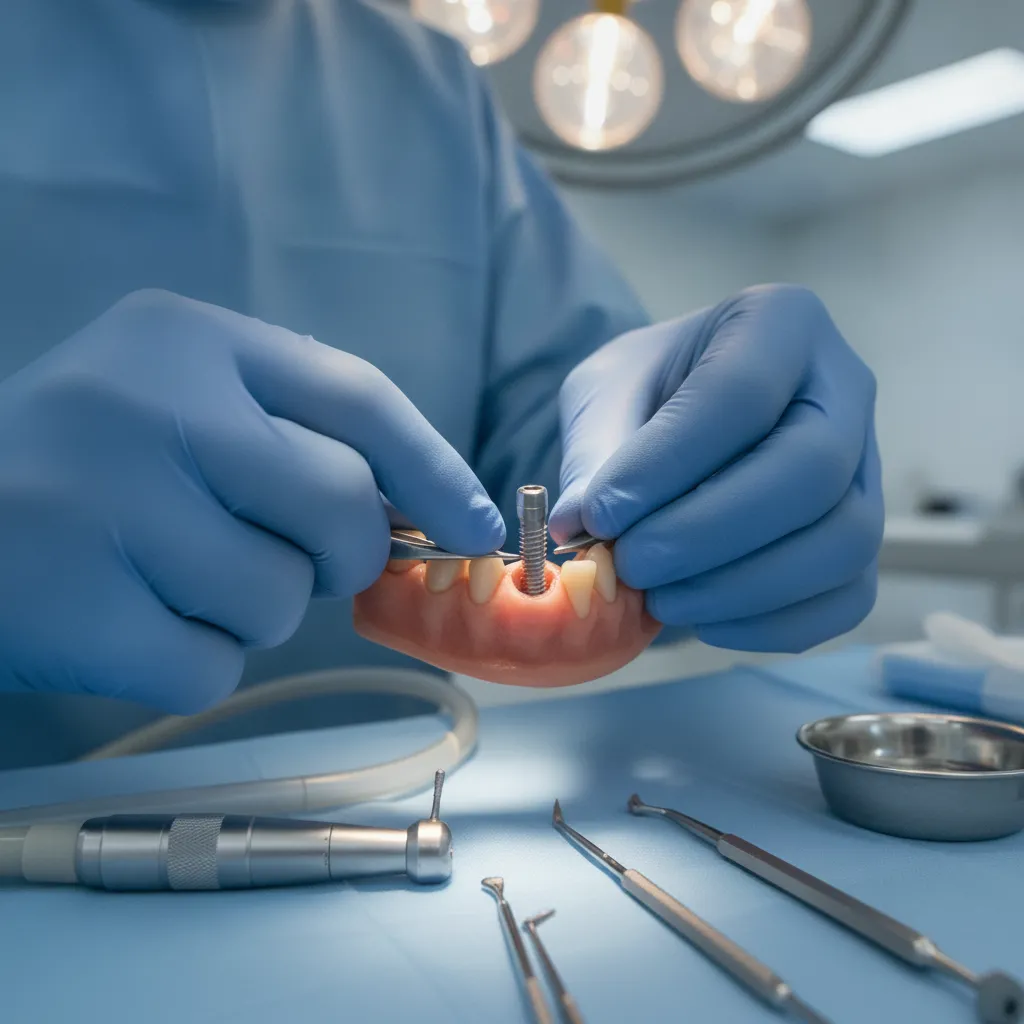
During the implant placement surgery, local anaesthesia is administered to ensure comfort. A small incision is made in the gum tissue to expose the jawbone, and a precisely sized hole is drilled to accommodate the implant. The titanium implant post is then carefully screwed into place. The gum tissue is then either closed over the implant (submerged technique) or a healing abutment is placed directly onto the implant, which extends through the gum line (one-stage technique).
For multiple implants, this surgery might be more extensive but often still consolidated into a single visit if all sites are ready. Post-operative check-ups, usually one or two, are scheduled in the weeks following surgery to monitor healing and remove sutures if necessary.
Healing and Osseointegration
Following implant placement, a critical healing period begins, known as osseointegration. This is the biological process where the titanium implant fuses directly with the jawbone. This process is essential for the implant to become a stable and strong anchor for the prosthetic tooth. Osseointegration typically takes anywhere from 3 to 6 months, though it can vary based on bone quality, patient health, and implant type.
During this period, the patient will have periodic check-up visits to ensure healing is progressing as expected. These visits are usually quick and serve to monitor the site and address any concerns. If the implant was placed using a two-stage technique (covered by gum tissue), a minor secondary procedure will be required after osseointegration to expose the implant and attach a healing abutment. This would constitute an additional short visit.
Restoration Phase: Abutment and Crown Placement
Once osseointegration is complete and the implant is firmly integrated with the bone, the final restoration can begin. This phase involves several appointments:
- Abutment Placement: If a healing abutment is not already in place, one will be attached to the implant. This serves as the connector between the implant and the final crown. Impressions are then taken of the healing abutment and surrounding teeth.
- Crown Fabrication: These impressions are sent to a dental laboratory, where a custom-made crown, bridge, or denture is fabricated to precisely fit the abutment and match your natural teeth in shape, size, and colour. This process usually takes a couple of weeks.
- Final Restoration Placement: Once the custom restoration arrives from the lab, you will return for a fitting appointment. The dentist will ensure the crown fits perfectly, checks your bite, and makes any necessary adjustments before permanently cementing or screwing it onto the abutment.
This final stage typically involves 2-3 visits: one for abutment placement and impressions, and one or two for the fitting and final placement of the prosthetic.
How Many Visits Are Needed for Implants UK?
The number of visits for dental implants in the UK is highly variable, reflecting the personalised nature of this advanced dental procedure. Here’s a typical breakdown:
| Phase of Treatment | Typical Number of Visits | Purpose | Duration of Phase |
|---|---|---|---|
| Initial Consultation & Planning | 1-2 visits | Assessment, diagnostics (X-rays, CBCT), treatment plan discussion | 1-2 weeks |
| Pre-Surgical Preparations (e.g., bone graft, extraction) | 1-2 visits (if needed) | Prepare jawbone/site for implant placement | Varies (4-9 months healing post-graft) |
| Implant Placement Surgery | 1-2 visits (including immediate post-op check) | Surgical insertion of the titanium implant post | 1-2 weeks for initial recovery |
| Healing & Osseointegration | 1-2 visits (monitoring) | Bone fusing with implant (no active treatment during this time) | 3-6 months |
| Abutment & Final Restoration | 2-3 visits | Exposing implant (if two-stage), taking impressions, fitting and placing crown/bridge | 2-4 weeks |
| Total Estimated Visits (Simple Case) | 4-7 visits | 5-9 months minimum | |
| Total Estimated Visits (Complex Case with Grafting) | 7-10+ visits | 12-18+ months |
This table illustrates that for a straightforward single implant case without the need for extensive preparatory work, a patient might expect around 4 to 7 visits spread over 5 to 9 months. However, for more complex cases involving bone grafting or multiple implants, the total number of visits and the overall treatment duration can extend significantly, potentially spanning over a year.
Factors Influencing the Number of Visits
Several key factors determine the variability in the number of visits:
- Patient Oral Health: The overall health of your gums and remaining teeth can influence the need for preliminary treatments.
- Bone Density and Volume: As discussed, insufficient bone necessitates grafting, adding visits and healing time.
- Number of Implants: While multiple implants can often be placed in a single surgical session, they might require more extensive planning and follow-up.
- Location of Implants: Implants in areas with specific anatomical considerations (e.g., near sinuses or major nerves) may require more meticulous planning and potentially more visits.
- Immediate vs. Delayed Loading: In some cases, if bone quality is excellent, a temporary crown can be placed on the implant immediately after surgery (immediate loading), potentially reducing visits for the restoration phase, though careful monitoring is still required. Most cases, however, follow a delayed loading protocol, waiting for full osseointegration.
- Patient Compliance: Adherence to post-operative instructions and attending all scheduled appointments ensures smooth progression.
- Clinical Decisions: Unexpected healing complications or specific clinical observations might necessitate additional check-ups.
The Importance of a Multi-Visit Approach
While the prospect of multiple dental appointments might seem daunting, each visit is a crucial step in ensuring the success and longevity of your dental implant. The staged approach allows for:
- Thorough Planning: Minimising risks and ensuring precise implant placement.
- Adequate Healing: Giving the body sufficient time for osseointegration, which is the cornerstone of implant stability.
- Customisation: Ensuring the final restoration perfectly matches your oral anatomy and aesthetic desires.
- Risk Mitigation: Identifying and addressing any potential complications early on.
The meticulous planning and execution over several visits lead to a highly predictable outcome, offering a solution that can last for decades with proper care. It’s an investment in your oral health, functionality, and confidence. For further information on the detailed stages of implant placement, you can refer to resources explaining the dental implant procedure step by step. The process ensures that each stage is perfected, leading to a robust and long-lasting result.
Post-Procedure Care and Long-Term Follow-up

Even after the final crown is placed, the journey doesn’t end. Regular dental check-ups and diligent oral hygiene are paramount for the long-term success of your dental implants. These routine visits allow your dentist to monitor the health of your implant, surrounding gums, and overall oral cavity. They can identify any potential issues early, such as peri-implantitis (gum disease around the implant), and provide professional cleaning and maintenance advice. While these are not part of the initial “visits needed for implants,” they are essential for maintaining your investment. Regular check-ups, typically every 6-12 months, will be part of your ongoing oral health routine, just like with natural teeth. You can learn more about the scientific basis of dental implants on Wikipedia.
In summary, while there isn’t a one-size-fits-all answer to how many visits are needed for dental implants in the UK, understanding the phased approach helps manage expectations. From the initial consultation and any necessary preparatory work to the surgical placement, healing, and final restoration, each stage plays a vital role. This comprehensive, multi-visit strategy is what supports the high success rate and lasting benefits of dental implants, making it a worthwhile commitment for those seeking to restore their smile and oral function.
For what happens at each appointment, see the implant procedure step by step.